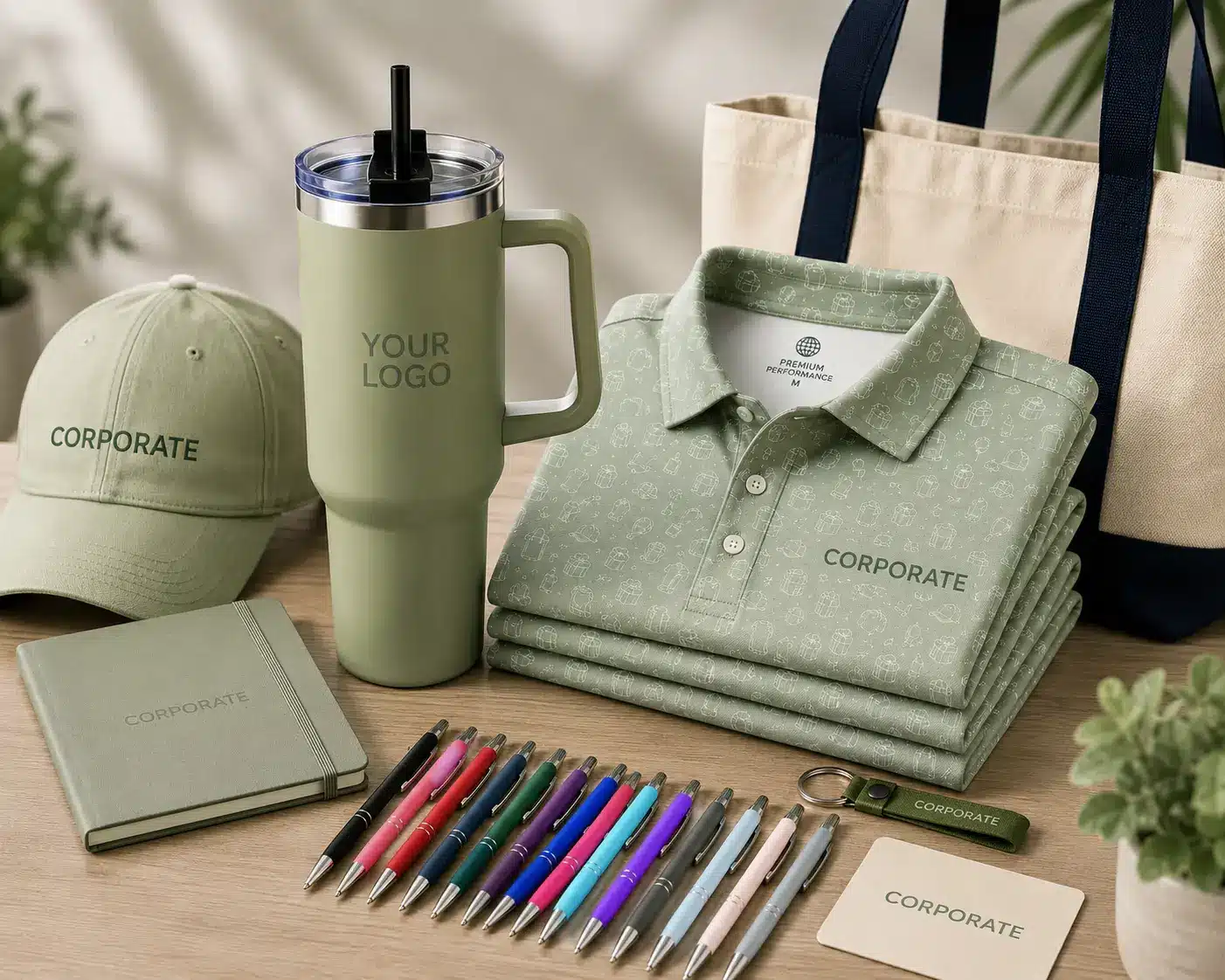
We have all been there. You hold the perfect sample in your hand. The logo is sharp and the color matches the brand guide. You sign the approval tag and send it back to the factory. But when the mass production arrives at your client’s door, it looks different. This creates a big risk for promotional product distributors who have hard event deadlines. Understanding why samples differ from production is the first step toward protecting your reputation and your money.
Key Takeaways
- Samples are often made by hand by experts, but mass production uses fast machines and different workers, which leads to quality changes.
- Material batches often change between the sample stage and the bulk order, causing small shifts in color and texture that you should expect.
- Checking the goods while they are still on the production line helps catch errors early so you do not miss your event date.
1. Why is the “Golden Sample” a Dangerous Trap?
You found the perfect sample and feel safe. But that perfection often hides the reality of a busy factory floor. If the sample is too perfect, the factory might not be able to make it again at scale.
Mass production involves speed, heat, and thousands of repetitions. A sample is a one-time creation. We see many distributors think the bulk order will be an exact copy of the prototype. But a prototype only shows that the idea works. It does not prove the factory can make 10,000 units without a single flaw.
The main gap is the difference between a person and a machine. In China, most factories have a special sample room. These rooms have the best workers in the building. These people have years of experience. They sew slowly and use small machines that they tune by hand. They might spend a whole day making just one bag.
But when the bulk order starts, that bag moves to the main line. Now, a worker must sew one bag every minute to hit the deadline. The machines are bigger and run much hotter. The small “tricks” the expert used to hide a seam or fix a zipper are gone. We focus on the technical friction between a design and a machine. If you do not plan for this, your project is at risk from the start.
2. Was the Sample Made Under Real Production Conditions?
A sample made in a small laboratory or a quiet sample room can be a lie. If the factory uses different tools for the sample than they use for the bulk, the results will change.
The origin of your sample determines if you can trust it. Samples made on slow, manual equipment often look better than mass-produced goods. This is because high-speed industrial machines create vibration and heat that small machines do not.
| Feature | Sample Room Environment | Mass Production Floor |
| Worker Skill | Master Maker (Very High) | General Staff (Average) |
| Speed | Slow and Careful | Fast and High-Volume |
| Equipment | Manual / Small-Batch | Large-Scale / Automated |
| Focus | Making One Perfect Item | Making Many Consistent Items |
We use the “Red Seal” process to stop quality from slipping. When we approve a sample, we do not just keep one. We create a “Counter-Sample.” One stays in our US office. One stays with our China team. We seal the last one with a signature and leave it with the factory manager. This stops “standard drift.” Standard drift happens when workers stop looking at the original sample and start looking at the last piece they just finished. Over thousands of units, the quality slowly moves away from the goal. Without a physical sample on the floor, the workers have no way to check their work.
3. Why Do Materials Change After Approval?
You approve a blue pen, but the bulk order arrives in a slightly different shade. This is usually not because the factory is cheating. Often, it is just how the supply chain works.
Material batch changes cause many production errors. A factory rarely makes every part of your产品. They buy fabric, plastic, or ink from sub-suppliers. Between the time you approve the sample and the time you start the bulk order, those materials may change. The original fabric roll used for the sample is gone. The new roll comes from a different batch. In our industry, small color shifts are a real risk. Even a tiny change in a plastic mix can change how a logo sticks to the surface.
We use our years of experience with US market standards to manage these risks. We select reliable material partners who understand consistency. We check that the bulk materials align with common quality expectations before the machines start. This is not about catching a “cheat.” It is about managing the natural variations in manufacturing.
4. Does Your Tooling Have “First-Off” Fatigue?
The first item off a mold looks great. The 50,000th item looks tired. If your product needs a custom mold, the sample only shows the mold in its best state.
Molds and cutting tools wear down over time. This is a common part of making goods at scale. As a metal mold for a power bank or a plastic bottle runs, the edges get dull. This creates “flash”—those small, sharp plastic bits on the seams. Your sample did not have flash because the mold was new or the sample maker trimmed it by hand.
Then there is the issue of machine settings. Machines need constant care to stay accurate.
- Shift Changes: When a new crew takes over the machine, they might adjust the heat or pressure slightly. These small changes add up.
- Continuous Run Heat: Machines running 24/7 can get too hot. This affects how the plastic or metal flows into the mold.
If the factory does not check the pressure and heat every few hours, the quality will drop. We suggest asking for “In-Process Samples.” These are random items pulled from the middle of the run. It helps ensure the mold is still working as well as it did on day one. We use our years of experience with US market standards to judge when a mold needs maintenance before it affects your event date.
5. Are Your Specs Too Tight for Reality?
Designers often create files with zero room for error. But in a factory, “zero error” does not exist. Every machine and every worker has a limit to how precise they can be.
A common mistake is “Tolerance Stack-Up.” Imagine you are making a custom metal water bottle with a bamboo lid. If the sample was a perfect fit with a $0.01\text{ mm}$ gap, it feels like a luxury item. But if the factory’s production tolerance is $\pm 0.5\text{ mm}$, your order will have problems. Half of the lids will be too loose, and the other half will not fit at all. The sample was just a lucky case where the parts lined up perfectly.
| Dimension Type | Importance | Strategy |
| Critical-to-Quality (CTQ) | High | No change allowed. Check these parts often. |
| Aesthetic / Look | Medium | Small changes in color or texture are okay. |
| Non-Critical | Low | Follow standard industry practices. |
We work with our clients to find the CTQ dimensions. You must tell the factory which parts cannot change. If the logo must be exactly 2 inches from the base, we put that in writing. If the color can vary slightly, we set those limits early. This stops the factory from guessing what matters to you. We follow standard industry practices to ensure your brand looks consistent across the whole order.
6. Do the Production Workers Know the “Secrets”?
Sometimes, a sample works because of a small trick. A sample maker might have used a specific heat setting or a hand-fold to make a corner look perfect. If this information stays in the sample room, the mass production team will struggle.
In many factories, workers pass information by talking instead of writing it down. This “Silent Knowledge Gap” is a risk for your order. When a factory moves from 1 sample to 5,000 units, they need a simple, clear guide to follow.
We do not ask for a 100-page manual. We focus on a simple “Spec Sheet.” This is a basic recipe that includes:
- The Logo Position: Exactly how many inches from the edge.
- The Ink Color: The specific Pantone match used.
- The Weight: The actual weight of the material to ensure it is not too thin.
We move beyond the phrase “Make it like the sample.” That phrase is too vague. Instead, we select reliable material partners and lock in the main specs. We use our years of experience with US market standards to decide what matters most. This keeps the quality consistent without making the process too slow or too expensive for your client.
7. Is Your Final Inspection Coming Too Late?
Many buyers wait until the goods arrive in the US to check quality. By then, you have already paid for the shipping and the products. If the order is wrong, you will miss your event date. You cannot fix a mistake from 5,000 miles away.
Quality control works best while the factory is still running. We call this a “During Production” check. We often check the goods when the order is 20% to 30% finished. This is a good time to catch a problem.
If the factory uses the wrong thread color or the logo position is slightly off, they have only made a small part of the order. They can still fix the rest of the goods. If you wait until the very end, you might find that the whole shipment is unusable. We use simple, real-world tests like the 3M Tape Test for imprints. We apply tape to the logo and pull it off. If the ink stays, the curing is correct. We use our years of experience with US market standards to identify these risks early. This is how we protect your inventory and your deadline.
8. Can the Shipping Environment Change Your Order?
A product is a physical thing that reacts to the world. Your office has climate control, but a shipping container does not. Humidity and heat are silent risks that can change your goods after they leave the factory.
We have seen products that look perfect at the factory change during 30 天 on a ship. A sample sits on a desk in a clean room, but the bulk order faces a different reality.
- The Transit Environment: Inside a metal container, temperatures can hit 140°F. Glues can soften and some materials can warp or grow mold if the moisture is too high.
- The Handling Factor: Your sample was likely sent in a small courier box. Your production order will be stacked on pallets and moved by forklifts.
We use our years of experience with US market standards to check for shipping risks. We look at the master cartons to ensure they are strong enough for the weight. We select reliable material partners who use moisture-absorbing packs if the product needs them. We focus on the packaging as much as the product. If the box fails, the product inside will not be ready for your event date.
9. How Do You Manage Risks Before Mass Production?
You do not have to leave your production to chance. You can build a system that minimizes these risks. The goal is to move beyond “hoping” the factory matches the sample.
First, consider a Pre-Production Sample (PPS). This is a unit made using mass-production materials. It helps you see how the logo and colors look on the final material before the factory starts the full run. While it is not always possible to run a full assembly line for one piece, a PPS is the best way to catch batch errors early.
Second, use the “Range of Acceptance” method.
- The Goal: The perfect sample you approved.
- The Limit: The maximum shift in color or texture you can accept.
We share these expectations with the factory early. This gives them a clear gauge. Finally, we use our own China-based team for on-site checks. Having our own eyes on the floor changes how a factory works. They pay more attention to the details when they know we are checking the “Red Seal” counter-sample against the bulk goods. We use our years of experience with US market standards to identify when a product does not meet common quality expectations.
Conclusion
Production is not magic. It is a process that requires clear rules. A sample is a proof of concept. It shows you what the factory can do on their best day. A simple spec sheet and a smart check-in plan are the tools that help keep the bulk order consistent.
We believe in the power of US Accountability + China Execution. We handle the business in the US to provide a local point of contact and accountability. But we keep our team on the ground in China to monitor the details. We follow standard industry practices to help you meet your event date and keep your brand looking its best.
FAQ
1. If the pre-production sample matches the golden sample, is the bulk order guaranteed to be safe?
Not necessarily. A sample proves the factory understands the specs, but mass production is a different process. Standard drift often happens during longer runs as machines heat up or workers change shifts. Pro Tip: For large orders, we suggest a TOP Sample check. For smaller, fast-turn orders (under 500 units), focus on the Red Seal counter-sample. We ensure the factory has a signed physical sample right next to the printing machine. This visual anchor is the most realistic way to keep a busy operator on track.
2. How do we handle color variance (Delta E) in dyed or plastic materials?
Color shifts are a reality because raw material batches change. You cannot expect 100% matching on every order, especially with repeating projects. We manage this by setting a “Range of Acceptance” early. Pro Tip: Ask for a photo of the bulk material next to your approved Pantone chip before they start. This takes the worker 30 seconds and can catch a major color error before a single piece is cut or molded. It is much easier to swap a material roll than to redo a finished order.
3. What is the most realistic way to prevent logo peeling on small orders?
You cannot always ask a factory to stop and send videos for 50 items. It slows down the “rush” service you need. The risk is that the dryer was not hot enough that morning. Pro Tip: Instead of a video, we include the “3M Tape Test” as a required step in our Purchase Order (PO) instructions. We tell the factory: “We will perform a 3M Tape Test upon arrival. If it fails, the batch is considered defective.” When a factory knows exactly how you will grade their work, they are much more careful with the curing temperature.
4. Why should I care about the master carton strength for lightweight items?
Even light items like lanyards can arrive damaged if the boxes collapse. In the promotional industry, boxes are often stacked 10-high on pallets during shipping. If the bottom box is too thin, it will crush, and your client will receive a messy, damaged delivery. Pro Tip: We look for double-wall (5-layer) corrugated boxes for any order over 30 lbs. For smaller air-freight orders, we ensure the factory uses reinforced tape. A strong box is the cheapest way to protect your event deadline during the “last mile” of delivery.