Blind shipping means fulfilling an order without presenting the supplier as the seller on the customer-facing packaging and paperwork, according to the agreed shipping instructions. For a promotional products distributor, the practical goal is straightforward: your client receives the order while your business remains their point of contact.
But “please blind ship” is not a complete shipping instruction. Before an order leaves, confirm the sender details, packing slip, carton markings, tracking messages and return process. A neutral outer box alone does not cover everything your client may see.
Blind shipping vs. direct shipping: what changes?
Direct shipping describes the route: goods go from the fulfillment location to your client instead of passing through your office. Blind shipping describes how the shipment identifies the businesses involved. An order can ship directly to a client and still carry supplier branding unless you agree otherwise.
| Arrangement | What to confirm |
|---|---|
| Direct shipment | The destination, recipient, delivery service and receiving requirements. |
| Blind shipment | Which sender identity, documents and branding the recipient will see. |
| Distributor-branded shipment | The approved logo, packing-slip layout and sender details, if available for the order. |
Use those distinctions when discussing a project. “Ship to my client” does not specify whether to use a neutral packing slip or one with your agency’s logo.
What should distributors check before a blind shipment?
1. Shipping label and return address
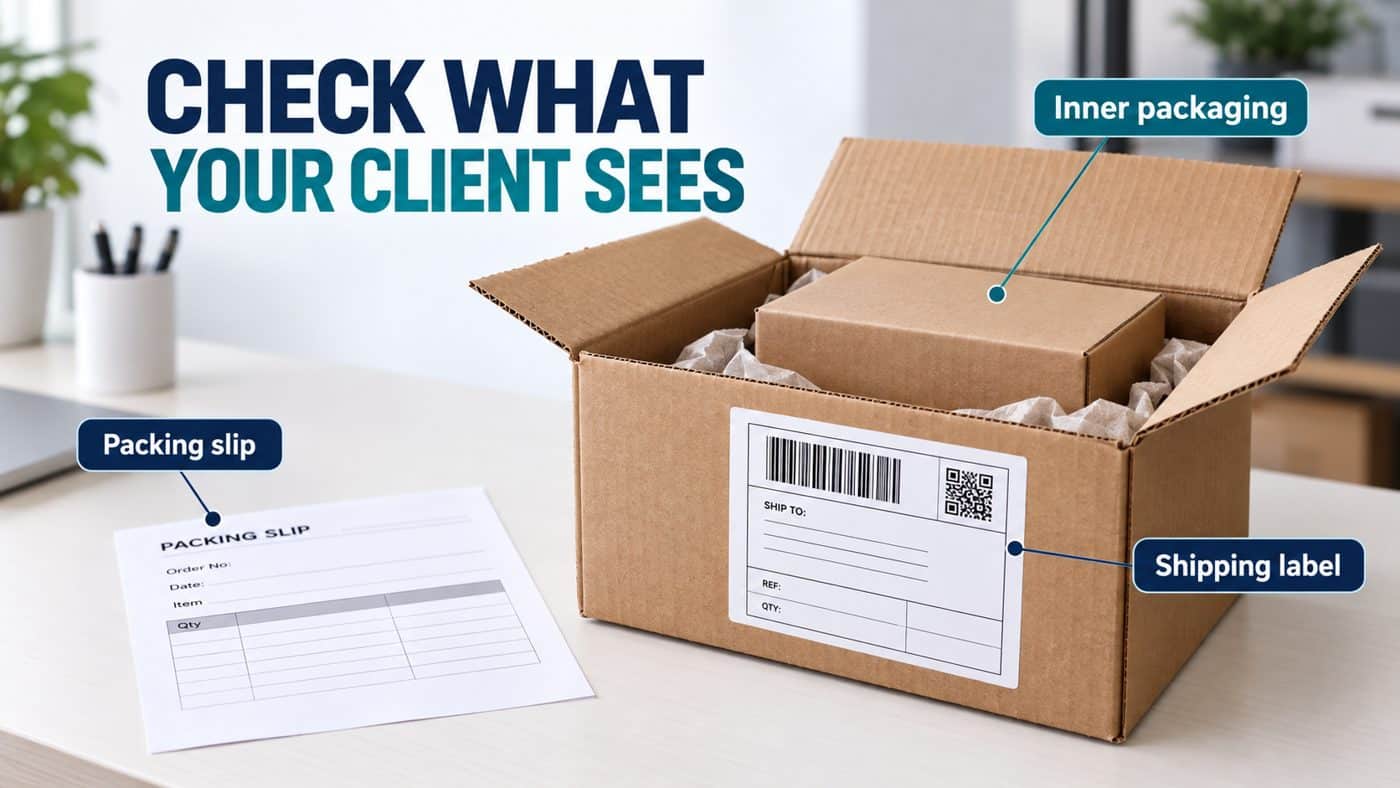
Specify the sender name you want displayed and ask the supplier to confirm what the selected carrier and shipping arrangement allow. Approve a label example before dispatch when possible. Check the recipient’s company name, attention line, street address, suite number and contact details separately.
Also decide where an undeliverable parcel should go. Your preferred sender name and the operational return location are separate decisions. Do not insert an address simply because it looks right on the label; confirm that someone can receive and handle a returned order there.
2. Packing slip and pricing
Give the supplier an approved packing-slip file or clear instructions for a neutral version. Identify the purchase-order reference your client expects, the product descriptions and the quantities to show. State whether any client-facing pricing belongs in the shipment. Supplier invoices and your internal purchasing documents should be handled through the agreed billing channel.
Keep product identification useful. A receiving team still needs to reconcile the delivery against its order even when supplier branding is absent.
3. Outer cartons, inner packaging and inserts
Review more than the shipping label. Ask about printed carton logos, branded tape, inner boxes, promotional leaflets, business cards and other inserts. A photo of a closed carton and a photo of the contents before sealing can make the review more concrete.
Separate optional marketing material from product labels, safety information and other required information. If any marking creates a concern, resolve it with the supplier before approving the order; do not treat blind shipping as permission to remove required information.
4. Tracking and delivery communications
Confirm who receives tracking numbers and who sends updates to the end client. Check the email sender name and the information visible on the tracking page where practical. A neutral carton does not automatically make carrier notifications or third-party tracking pages neutral.
If your client needs a delivery appointment, name the person responsible for arranging it. Event venues may require an exhibitor name, booth number, arrival window or receiving reference in addition to a street address.
5. Split shipments and exceptions
For multiple destinations, provide one approved address list with a quantity for each location. Ask how carton counts and tracking numbers will be reported. Repeat the blind-shipping instructions for replacements, samples and backorders rather than assuming the original instructions carry over automatically.
Timing matters here. Finalize destination and packaging details alongside artwork approval. Our guide to promotional product lead times explains how approvals, production and transit fit around an in-hand date.
A pre-dispatch checklist you can reuse
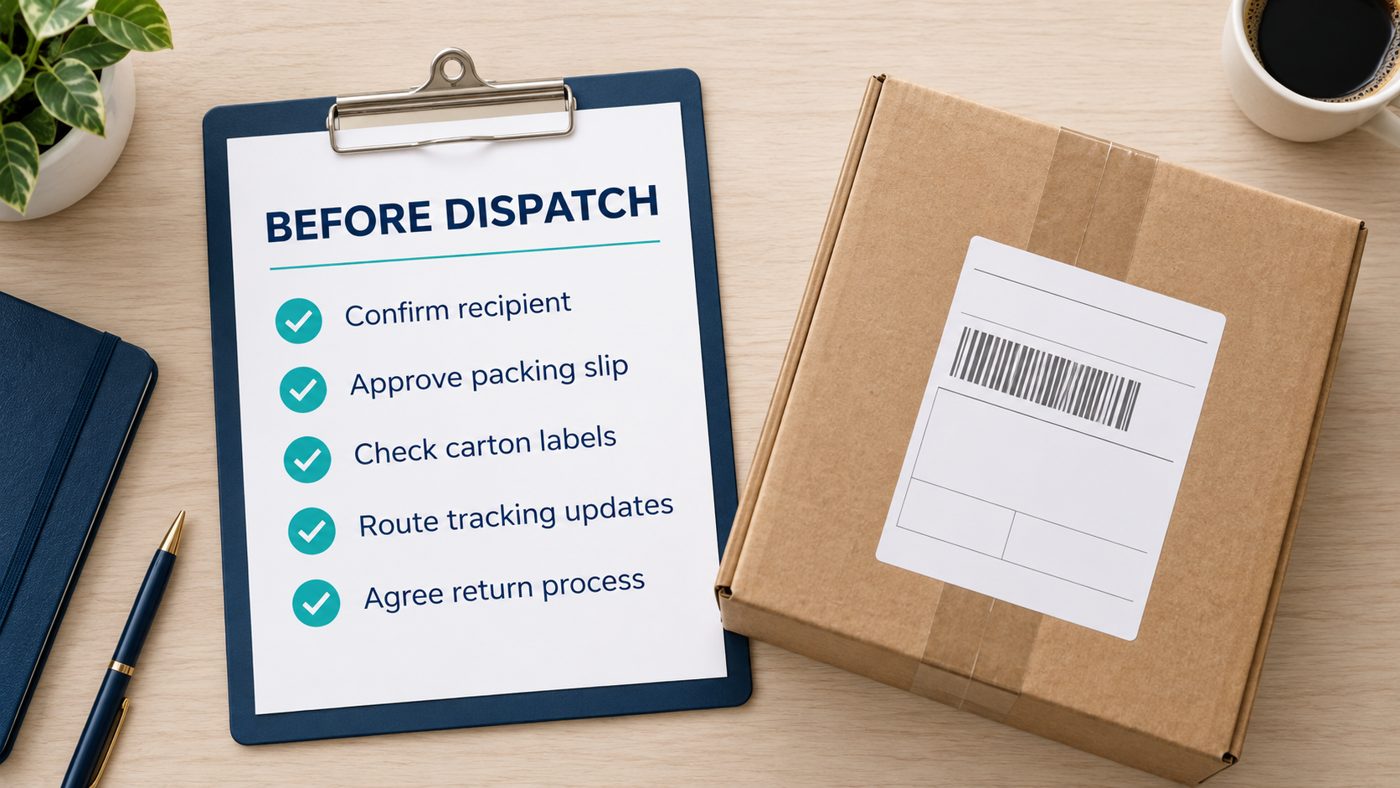
- Approved ship-to address, recipient and receiving requirements.
- Confirmed sender name and operational return address.
- Approved packing slip and client-facing order reference.
- Instructions for optional logos, tape and marketing inserts.
- Carton and inner-packaging review, where available.
- Quantity and carton allocation for each destination.
- Tracking recipient and responsibility for client updates.
- A contact and agreed process for shortages, damage and returns.
Put these instructions in the order record, not only in a separate email conversation. If something changes, send a revised version and ask for acknowledgment before dispatch.
Copyable blind-shipping instructions for your next order
Replace the bracketed fields and send this with your purchase order:
Blind-shipping request — PO [reference]
Please confirm blind-shipping arrangements for [product and quantity] to [destination]. Our required in-hand date is [date]; the receiving window and delivery contact are [details].
Customer-facing sender name: [name]. Proposed return address: [address — please confirm suitability]. Packing slip: [attached approved file / requested neutral format]. Client-facing order reference: [reference].
Optional supplier marketing inserts and branding: [instructions]. Please flag any required product markings or documents that need separate review. Send tracking to [distributor contact] and confirm who will notify the recipient.
Please confirm feasibility, any added charges, the deadline for changes, and any exceptions before we approve dispatch.
Does blind shipping change the quote?
Ask for the shipping and packaging requirements to be included in the quote. Custom packing slips, special packing, multiple destinations, delivery appointments or additional handling may affect the scope. Do not assume they are included or that every project carries the same charge.
Keep decoration costs separate from fulfillment costs when comparing quotes. The guide to promotional product setup charges covers a different part of the order: preparing the decoration process.
Frequently asked questions
Can a sample be blind shipped to my client?
Ask for confirmation on the specific sample. State whether you need a neutral package, an approved insert and tracking sent to your agency. Also clarify what the sample demonstrates; our guide to why samples can differ from production helps set expectations before client approval.
Does blind shipping hide every detail about the supply chain?
Do not assume complete anonymity. Product markings, tracking details and shipment documentation may contain information beyond the customer-facing packing slip. Agree on what can be controlled and review any limits before promising a particular experience to your client.
What happens if the client needs a replacement or return?
Keep your agency as the agreed service contact and establish the next step with the supplier. Confirm the evidence needed, the return destination if applicable, and the labeling instructions for a replacement shipment. Avoid sending the client to an unconfirmed return address.
Plan blind shipping with the product order
SN International’s sourcing and fulfillment process includes blind delivery. For your project, confirm the exact packaging, label and routing requirements during the quote stage rather than leaving them until dispatch.
Choose the items from our promotional products range, then send your project requirements with quantities, destination count, in-hand date and blind-shipping instructions. That gives the team a clear brief for reviewing the order and any delivery exceptions.