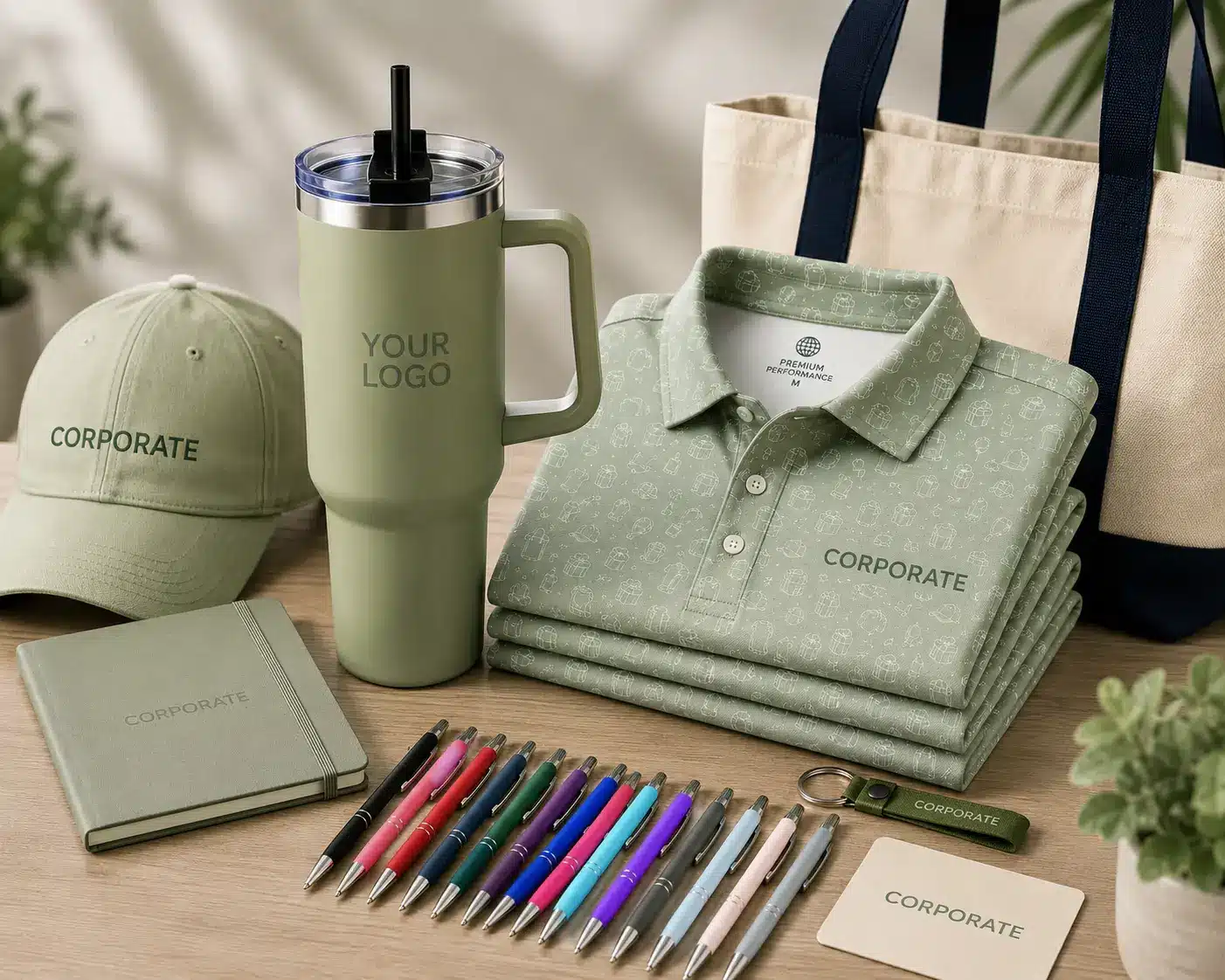
An imprint color is a color used to reproduce a logo or design on a promotional product. It is separate from the color of the product itself. A white logo printed on a navy bag, for example, may be described as a one-color imprint; the navy bag is the background.
For distributors, the useful question is what the supplier will actually produce and include in the quote. Color count, print method, location and artwork requirements need to agree before you present an option to your client.
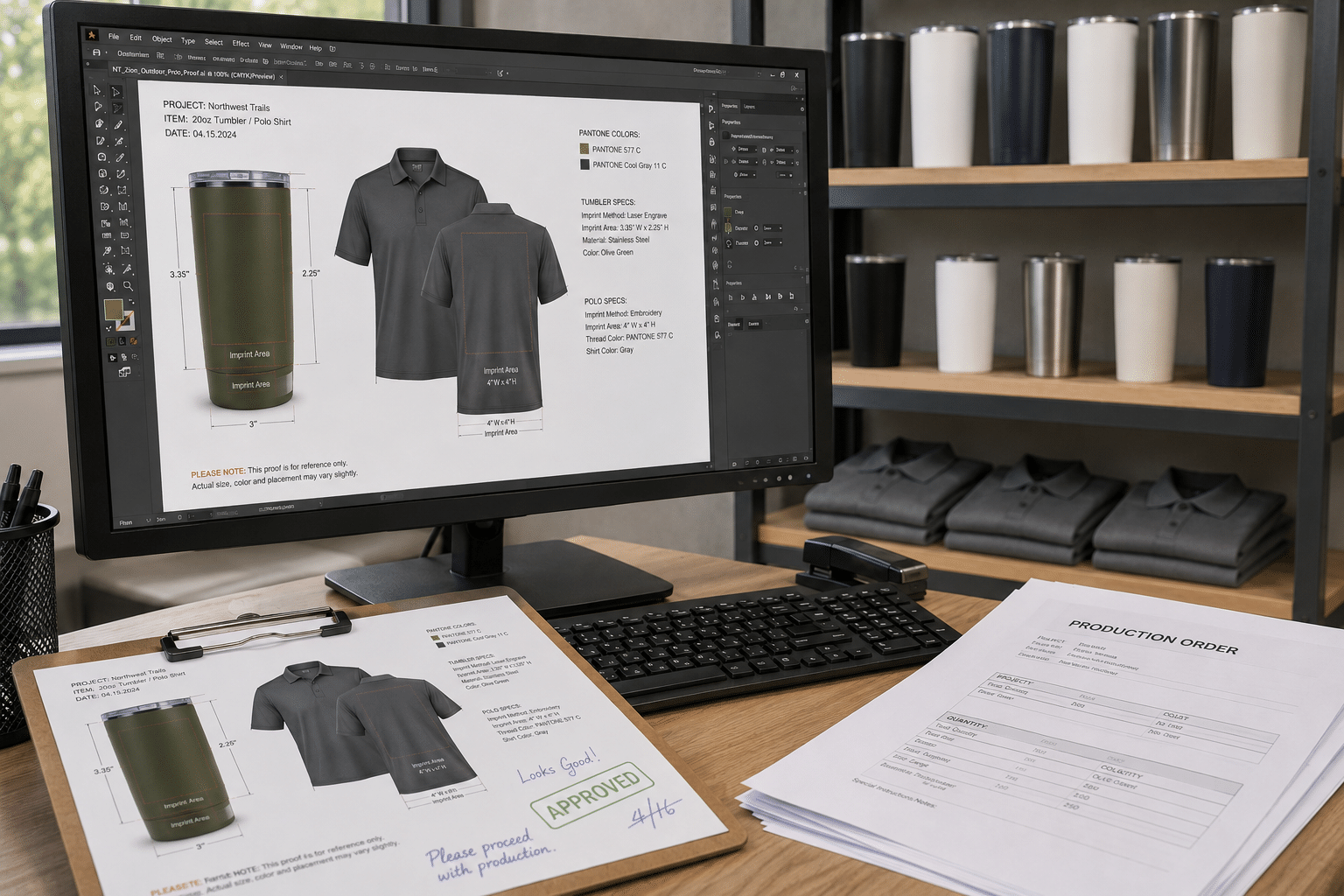
Imprint color, product color and imprint location are different specifications
- Product color: the base item color, such as a black tumbler or natural canvas tote.
- Imprint color: the color applied to create the design, such as white lettering.
- Imprint area: the space available for decoration. A logo that works on a tote may need adjustment for a pen.
- Imprint location: where decoration appears, such as the front and back. One color in two locations is different from one color in one location.
When comparing promotional product options, record all four specifications. Do not assume a second location or an additional color is included simply because the same artwork is reused.
How should you count colors in a client’s logo?
Start with the supplied artwork, then ask the supplier to confirm the production interpretation. These examples illustrate questions to ask; they are not SN pricing rules.
| Artwork situation | What the distributor should confirm |
|---|---|
| Solid blue logo on a white item | Whether the artwork can be quoted as one spot color in the requested location. |
| Blue logo with white lettering on a dark item | Whether white is printed artwork or an unprinted area, and whether a base layer is needed. |
| Logo with a gradient or photograph | Whether the chosen decoration process supports the artwork or requires a simplified version. |
| Same logo on front and back | Color count and decoration requirements for each location. |
| Same logo on several product colors | Whether ink, contrast or artwork needs to change between item colors. |
A white background in a preview file does not establish that white ink will be printed. Ask whether it represents the product, transparency or a printed part of the design. For dark items, ask whether an underbase is needed and how it is treated in the quote. The visible color count alone may not describe every production step.
Spot colors versus full-color printing
Spot-color artwork specifies individual colors. Process-color printing builds an image from a set of inks, commonly cyan, magenta, yellow and black (CMYK). A photograph may contain many visible shades without being quoted as a separate spot ink for each shade. Pantone explains the technical distinction in its spot versus process color guide.
Ask which method is available on the specific item. “Full color” is not a guarantee that any file will reproduce correctly, nor does it define the decoration area or included locations. A gradient, fine lettering or small reversed detail may need a different treatment from a simple solid logo.
Request a simplified artwork option when appropriate, but obtain the client’s approval before removing gradients, changing brand colors or dropping small details.
Does a Pantone reference guarantee a color match?
A Pantone reference communicates a target; it does not by itself establish the final appearance on every promotional product. Pantone documents how material and printing conditions can affect appearance in its explanation of printing process color variation.
Provide the complete reference from the client’s brand guide, including any suffix. Ask whether the selected item and decoration method support matching, what reference will be used for approval, and whether a decorated sample is appropriate. Avoid promising that a monitor preview, paper swatch, fabric print and coated drinkware surface will look identical.
A distributor’s checklist before requesting a quote
- Identify the item. Provide the product reference, base color and quantities by variation.
- Send usable artwork. Include the original design file if available. Confirm accepted file formats, font handling and image resolution with the supplier for the chosen process.
- Specify each location. State the requested logo size and position rather than relying only on a mockup.
- Provide color references. Include the brand guide, spot-color references and any acceptable alternative artwork.
- Flag critical details. Identify small text, gradients, white elements and color-sensitive branding before quoting.
- Clarify the quote. Ask what decoration is included and whether artwork changes, matching, additional locations or samples affect the price.
- State the delivery requirement. Give the needed delivery date and destination, and ask how proof approval and sampling affect the schedule.
Keeping these details in one request makes it easier to compare supplier responses and explain options to the client. See SN’s sourcing services for the broader project workflow.
What should you check on the proof?
Check the product reference and color, artwork version, spelling, dimensions, location and color callouts. If the proof differs from the quote or purchase order, resolve the difference before approval. Keep the approved revision identifiable so later changes do not rely on an outdated attachment.
A digital proof helps communicate the intended layout and specifications. It is not a physical test of ink appearance or the finished surface. If color or decoration is critical to the purchase, ask what sample can be supplied, what it will represent and how it will be used for production approval. Our guide to why samples can differ from production covers related checks.
Prepare your next decoration request
Before quoting your client, bring the product, artwork, color references and approval requirements together. A clear specification gives the supplier something concrete to evaluate and gives your client a defined result to approve.
Send SN your project details for a quote. Include your product selection, artwork, quantity, decoration locations and required delivery date, and ask the team to confirm the available decoration approach and color requirements for that item.